| dc.contributor | Vall d'Hebron Barcelona Hospital Campus |
| dc.contributor.author | Herrero, Carolina |
| dc.contributor.author | Brea, Jose |
| dc.contributor.author | Pérez-Díaz, Amparo |
| dc.contributor.author | Cuadrado, Emiliano |
| dc.contributor.author | Ferreño, Noelia |
| dc.contributor.author | Colas Ortega, Eva |
| dc.contributor.author | Gil Moreno, Antonio |
| dc.contributor.author | Moiola, Cristian Pablo |
| dc.date.accessioned | 2022-01-20T14:52:05Z |
| dc.date.available | 2022-01-20T14:52:05Z |
| dc.date.issued | 2021-08-01 |
| dc.identifier.citation | Herrero C, Brea J, Pérez-Díaz A, Cuadrado E, Ferreño N, Moiola CP, et al. Modeling ANXA2-overexpressing circulating tumor cells homing and high throughput screening for metastasis impairment in endometrial carcinomas. Biomed Pharmacother. 2021 Aug 1;140:111744. |
| dc.identifier.issn | 0753-3322 |
| dc.identifier.uri | https://hdl.handle.net/11351/6855 |
| dc.description | Circulating tumor cells; Micrometastasis; Daunorubicin |
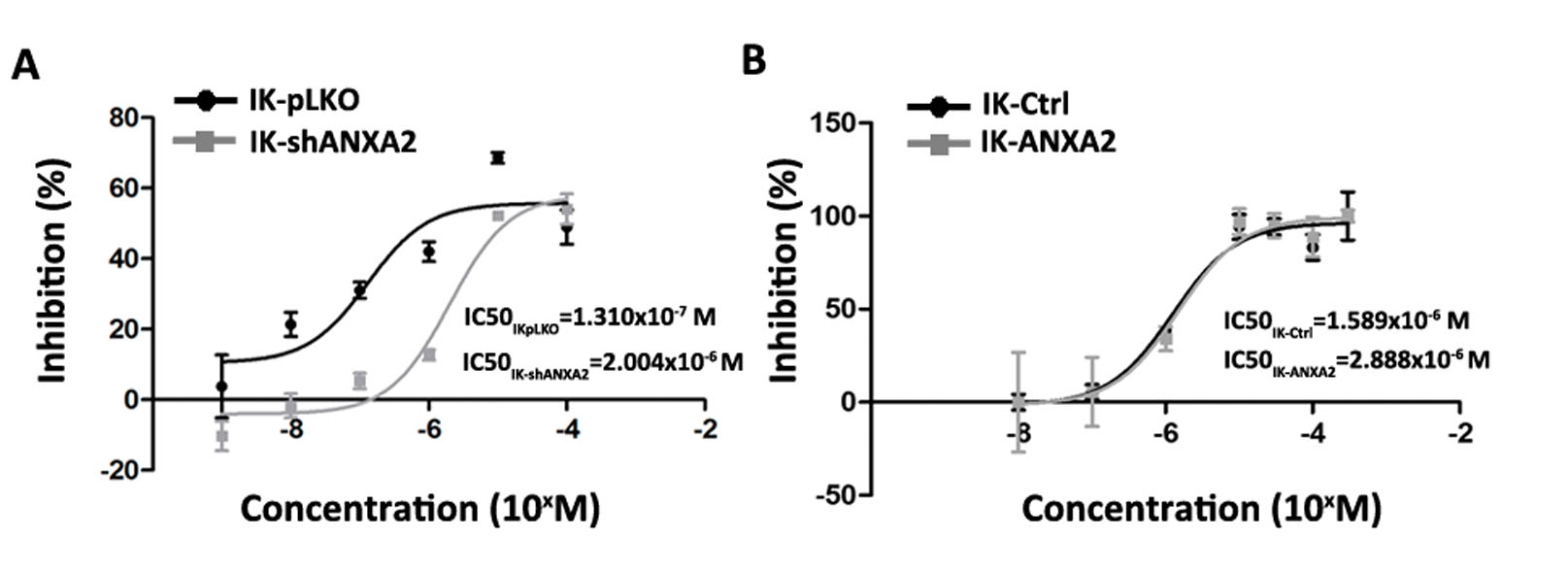
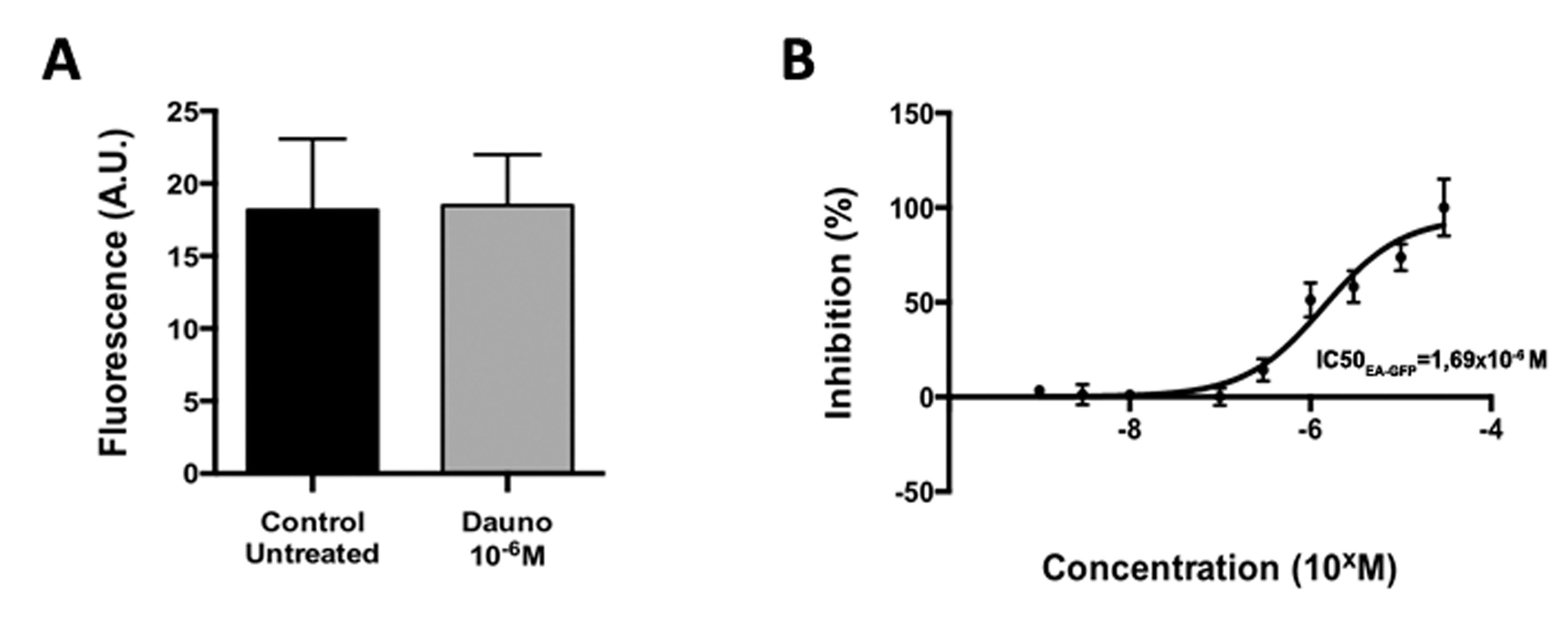
| dc.description.abstract | Endometrial cancer (EC) is the most common neoplasm of the female reproductive tract in the developed world. Patients usually are diagnosed in early stage having a good prognosis. However, up to 20–25% of patients are diagnosed in advanced stages and have a higher risk of recurrence, making the prognosis worse. Previously studies identified ANXA2 as a predictor of recurrent disease in EC even in low risk patients. Furthermore, Circulating Tumor Cells (CTC) released from the primary tumor into the bloodstream, are plasticity entities responsible of the process of metastasis, becoming into an attractive clinical target. In this work we validated ANXA2 expression in CTC from high-risk EC patients. After that, we modelled in vitro and in vivo the tumor cell attachment of ANXA2-expressing CTC to the endothelium and the homing for the generation of micrometastasis. ANXA2 overexpression does not provide an advantage in the adhesion process of CTC, but it could be playing an important role in more advanced steps, conferring a greater homing capacity. We also performed a high-throughput screening (HTS) for compounds specifically targeting ANXA2, and selected Daunorubicin as candidate hit. Finally, we validated Daunorubicin in a 3D transendothelial migration system and also in a in vivo model of advanced EC, demonstrating the ability of Daunorubicin to inhibit the proliferation of ANXA2-overexpressing tumor cells. |
| dc.language.iso | eng |
| dc.publisher | Elsevier |
| dc.relation.ispartofseries | Biomedicine & Pharmacotherapy;140 |
| dc.rights | Attribution-NonCommercial-NoDerivatives 4.0 International |
| dc.rights.uri | http://creativecommons.org/licenses/by-nc-nd/4.0/ |
| dc.source | Scientia |
| dc.subject | Endometri - Càncer - Tractament |
| dc.subject | Cèl·lules canceroses |
| dc.subject.mesh | Endometrial Neoplasms |
| dc.subject.mesh | /drug therapy |
| dc.subject.mesh | Neoplastic Cells, Circulating |
| dc.title | Modeling ANXA2-overexpressing circulating tumor cells homing and high throughput screening for metastasis impairment in endometrial carcinomas |
| dc.type | info:eu-repo/semantics/article |
| dc.identifier.doi | 10.1016/j.biopha.2021.111744 |
| dc.subject.decs | neoplasias endometriales |
| dc.subject.decs | /farmacoterapia |
| dc.subject.decs | células neoplásicas circulantes |
| dc.relation.publishversion | https://doi.org/10.1016/j.biopha.2021.111744 |
| dc.type.version | info:eu-repo/semantics/publishedVersion |
| dc.audience | Professionals |
| dc.contributor.organismes | Institut Català de la Salut |
| dc.contributor.authoraffiliation | [Herrero C, Ferreño N] Translational Medical Oncology Group (Oncomet), Health Research Institute of Santiago de Compostela (IDIS), University Hospital of Santiago de Compostela (SERGAS), Santiago de Compostela, Spain. [Brea J, Pérez-Díaz A, Cuadrado E] Drug Screening Platform/Biofarma Research Group, Centro Singular de Investigación en Medicina Molecular y Enfermedades Crónicas (CIMUS), Universidade de Santiago de Compostela, Santiago de Compostela, Spain. [Moiola CP] Grup de Recerca Biomèdica en Ginecologia, Vall d’Hebron Institut de Recerca (VHIR), Barcelona, Spain. Universitat Autònoma de Barcelona, Bellaterra, Spain. [Colás E, Gil-Moreno A] Grup de Recerca Biomèdica en Ginecologia, Vall d’Hebron Institut de Recerca (VHIR), Barcelona, Spain. Universitat Autònoma de Barcelona, Bellaterra, Spain. Centro de Investigación Biomédica en Red de Cáncer (CIBERONC), Madrid, Spain |
| dc.identifier.pmid | 34049223 |
| dc.identifier.wos | 000670106300001 |
| dc.rights.accessrights | info:eu-repo/semantics/openAccess |

 Private area
 Contact Us