| dc.contributor | Vall d'Hebron Barcelona Hospital Campus |
| dc.contributor.author | Roca, Neus |
| dc.contributor.author | Madrid Aris, Alvaro Domingo |
| dc.contributor.author | López González, Mercedes |
| dc.contributor.author | Fraga Rodriguez, Gloria Mª |
| dc.contributor.author | Jatem-Escalante, Elias |
| dc.contributor.author | Gonzalez, Jorge |
| dc.date.accessioned | 2022-03-22T14:27:50Z |
| dc.date.available | 2022-03-22T14:27:50Z |
| dc.date.issued | 2021-07 |
| dc.identifier.citation | Roca N, Madrid A, Lopez M, Fraga G, Jatem E, Gonzalez J, et al. Multidimensional inflammatory and immunological endotypes of idiopathic focal segmental glomerulosclerosis and their association with treatment outcomes. Clin Kidney J. 2021 Jul;14(7):1826–34. |
| dc.identifier.issn | 2048-8513 |
| dc.identifier.uri | https://hdl.handle.net/11351/7241 |
| dc.description | Endotypes; Focal segmental glomerulosclerosis; Inflammatory response |
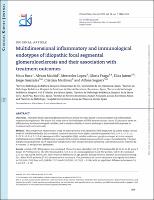
| dc.description.abstract | Objectives
Idiopathic focal segmental glomerulosclerosis (FSGS) has been linked to immunological and inflammatory response dysregulations. The aim of this study was to find endotypes of FSGS patients using a cluster (CL) analysis based on inflammatory and immunological variables, and to analyse whether a certain endotype is associated with response to treatment with corticosteroids.
Methods
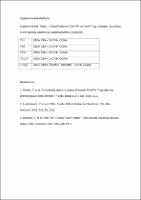
This prospective observational study included patients with idiopathic FSGS diagnosed by kidney biopsy. Serum levels of soluble interleukin (IL)-1 receptor, tumoural necrosis factor alpha, Interferon gamma (IFNγ), IL-6, IL-17, IL-12, IL-23, IL-13, IL-4, IL-5, IL-6, haemopexin (Hx), haptoglobin (Hgl), soluble urokinase-type plasminogen activator receptor (suPAR) and urinary CD80 (uCD80) were measured with enzyme-linked immunosorbent assay or nephelometry. T-helper lymphocyte populations and T-regulatory lymphocytes were analysed by flow cytometry. A factorial analysis followed by a k-means CL analysis was performed.
Results
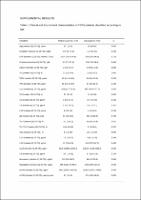
A total of 79 FSGS patients were included. Three CLs were identified. CL1 (27.8%) included IL-12, IL-17, IL-23 and a T helper 17 (Th17) pattern. CL2 (20.2%) included IL-4, IL-5, IL-13, immunoglobulin E and Th2 pattern. CL3 (51.8%) included IL-6, Hx, Hgl, suPAR and uCD80. There were no differences in age, gender, kidney function, albumin or proteinuria among CLs. About 42/79 patients (53.1%) showed cortico-resistance. The prevalence of cortico-resistance was significantly lower in CL2 (4/16, 25%) than in CL1 (16/26, 72.7%) and CL3 (22/41, 53.7%) (P = 0.018), with no significant differences between CLs 1 and 3 (P = 0.14).
Conclusions
Patients with FSGS and indistinguishable clinical presentation at diagnosis were classified in three distinct CLs according to predominant Th17, Th2 and acute inflammatory responses that display differences in clinical response to treatment with corticosteroids. |
| dc.language.iso | eng |
| dc.publisher | Oxford University Press |
| dc.relation.ispartofseries | Clinical Kidney Journal;14(7) |
| dc.rights | Attribution-NonCommercial 4.0 International |
| dc.rights.uri | http://creativecommons.org/licenses/by-nc/4.0/ |
| dc.source | Scientia |
| dc.subject | Glomerulosclerosi - Tractament |
| dc.subject | Corticosteroides - Ús terapèutic |
| dc.subject.mesh | Glomerulosclerosis, Focal Segmental |
| dc.subject.mesh | /drug therapy |
| dc.subject.mesh | Adrenal Cortex Hormones |
| dc.subject.mesh | /therapeutic use |
| dc.title | Multidimensional inflammatory and immunological endotypes of idiopathic focal segmental glomerulosclerosis and their association with treatment outcomes |
| dc.type | info:eu-repo/semantics/article |
| dc.identifier.doi | 10.1093/ckj/sfaa265 |
| dc.subject.decs | glomeruloesclerosis focal |
| dc.subject.decs | /farmacoterapia |
| dc.subject.decs | hormonas de la corteza suprarrenal |
| dc.subject.decs | /uso terapéutico |
| dc.relation.publishversion | https://doi.org/10.1093/ckj/sfaa265 |
| dc.type.version | info:eu-repo/semantics/publishedVersion |
| dc.audience | Professionals |
| dc.contributor.organismes | Institut Català de la Salut |
| dc.contributor.authoraffiliation | [Roca N] Servicio Nefrologia Pediátrica, Hospital Universitari de Vic, Universitat de Vic, Barcelona, Spain. [Madrid A] Servicio de Nefrología Pediátrica, Hospital de Sant Joan de Déu de Barcelona, Barcelona, Spain. [Lopez M] Servei de Nefrologia Pediàtrica, Vall d’Hebron Hospital Universitari, Barcelona, Spain. [Fraga G] Servei de Nefrologia Pediàtrica, Vall d’Hebron Hospital Universitari, Barcelona, Spain. Servicio de Nefrología Pediátrica, Hospital de la Santa Creu i Sant Pau, Barcelona, Spain. [Jatem E, Gonzalez J] Institut de Recerca Biomedica August Pi Sunyer, Lleida, Barcelona, Spain. Servicio de Nefrologia, Hospital Universitario Arnau de Vilanova, Lleida, Spain |
| dc.identifier.pmid | 34221390 |
| dc.identifier.wos | 000672763100014 |
| dc.rights.accessrights | info:eu-repo/semantics/openAccess |

 Private area
 Contact Us