Abstract
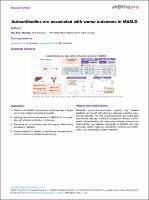
Background & aims: Metabolic dysfunction-associated steatotic liver disease (MASLD) is a leading cause of chronic liver disease worldwide. Autoantibodies (Ab), such as antinuclear antibodies (ANA) and anti-smooth muscle antibodies (ASMA), are frequently detected in MASLD, but their role in disease progression remains controversial. This study aimed to evaluate the prevalence of positive Ab and the histological features of autoimmune hepatitis (AIH) in MASLD and their association with liver-related outcomes.
Methods: We conducted a multicenter, retrospective, longitudinal study of patients with biopsy-proven MASLD from the HEPAmet Registry. Data on ANA (≥1/80), ASMA (≥1/40), and AIH histological features (portal inflammation, interface hepatitis, and plasma cell infiltration) were analyzed for their association with compensated advanced chronic liver disease (cACLD), liver decompensation, and death.
Results: Of the 460 patients (49% women, median age 58 years, median BMI 33 kg/m2, and 45% with advanced fibrosis), 17% and 25% tested positive for ANA and ASMA, respectively. Histological features of AIH included interface hepatitis (19%), moderate/severe portal inflammation (12%), and plasma cell clusters (10%). Possible AIH based on histological criteria was present in 8% of patients. The presence of positive Ab was independently associated with cACLD development (odds ratio 2.890, p <0.030), liver decompensation (hazard ratio 3.969, p = 0.001), and death (hazard ratio 2.546, p = 0.036). In contrast, the presence of isolated histologic autoimmune features was not correlated with serological markers and did not affect the prognosis of MASLD.
Conclusions: ANA and ASMA are commonly found in patients with MASLD and are associated with poorer liver-related outcomes and reduced survival, whereas isolated histological autoimmune features provide no additional prognostic value.
Impact and implications: Metabolic dysfunction-associated steatotic liver disease (MASLD) can coexist with other liver diseases, including autoimmune hepatitis. The role of autoantibodies and histological autoimmune features in MASLD progression remains controversial. Understanding the relationship between autoimmune characteristics and disease progression in MASLD may help physicians identify high-risk populations, enhance risk stratification, and personalize disease treatment.
Keywords
Autoantibodies; Autoimmune hepatitis; Cirrhosis
Bibliographic citation
Soria A, Díaz A, Iruzubieta P, Martín-Mateos R, Salcedo-Allende MT, Jiménez-Masip A, et al. Autoantibodies are associated with worse outcomes in MASLD. JHEP Reports. 2025 Oct;7(10):101470.

 Private area
 Contact Us